
Sojitz’s Biomethane Production and Sales Business in India:
Joining India’s National Biomethane Strategy to Pursue Decarbonization and Enhanced Energy Security
Jul. 14, 2026
Jul. 14, 2026
Strengthening energy security and advancing decarbonization are two of the most important challenges facing India today. Sojitz is taking a trailblazing approach to addressing these challenges by producing energy using rice straw, a type of agricultural waste. In April 2025, Sojitz entered the compressed biomethane production and sales business by investing in IOC GPS Renewables Pvt. Ltd. (IGRPL), a joint venture established by Indian Oil Corporation Ltd. (IOCL), India’s largest state-owned oil company, and GPS Renewables Pvt. Ltd. (GPSR), a leading bioenergy company in India focused on biofuels such as compressed biomethane gas. Sojitz has set a target of launching operations at 30 biomethane plants in India by FY2027, with plans to produce and sell 160,000 tons of compressed biomethane annually.
- Sojitz has entered the compressed biomethane production and sales business in India, the world’s third-largest energy consumer, and is contributing to efforts to enhance the country’s energy security
- Through investment in IGRPL, Sojitz aims to reduce CO2 emissions, curb air pollution, and improve farmer incomes in India by producing and selling compressed biomethane made from agricultural waste
- Sojitz has set a target of launching operations at 30 compressed biomethane plants in India by FY2027, with plans to produce and sell 160,000 tons of compressed biomethane annually. The company is also promoting decarbonization efforts on a global scale through expansion of its landfill biomethane business in the U.S.
India is the world’s third largest energy consumer after China and the U.S. The country relies on imports for roughly 80% of its crude oil and 50% of its natural gas demand, and energy demand is expected to rise alongside continued economic growth. In response, the Indian government has announced a commitment
to transform India into an energy independent nation by 2047. To realize this vision, the government has identified specific goals such as transitioning to a gas-based economy by raising the share of natural gas in the country’s primary energy mix from 6% to 15% by 2030. Other initiatives include the promotion of a 20% bioethanol blend in gasoline, the electrification of mobility and railways, and the accelerated adoption of renewable energy sources.
However, India faces significant challenges in its transition to a gas-based economy. Domestic production of natural gas is decreasing while import volumes steadily increase each year, and this trend has raised concerns about stable energy procurement and the outflow of foreign currency due to import reliance. To address these energy challenges, the Indian government has set its sights on compressed biomethane. This biofuel can be produced domestically using agricultural waste and has potential as a game-changing solution that can both curb natural gas imports while improving India’s energy independence.
Biogas is a mixture of methane and CO2 produced from organic material such as agricultural and municipal waste. Through a process known as anaerobic digestion, bacteria in an oxygen-free environment break down these materials and generate biogas. To produce compressed biomethane, the raw gas is purified to increase its methane content, then compressed. Compressed biomethane is garnering attention as an alternative energy source that could substantially reduce greenhouse gas emissions compared to fossil-based natural gas. The Indian government has adopted a national policy to actively promote the spread of compressed biomethane through efforts such as requiring city gas operators to blend specified amounts of compressed biomethane into municipal gas supplies.
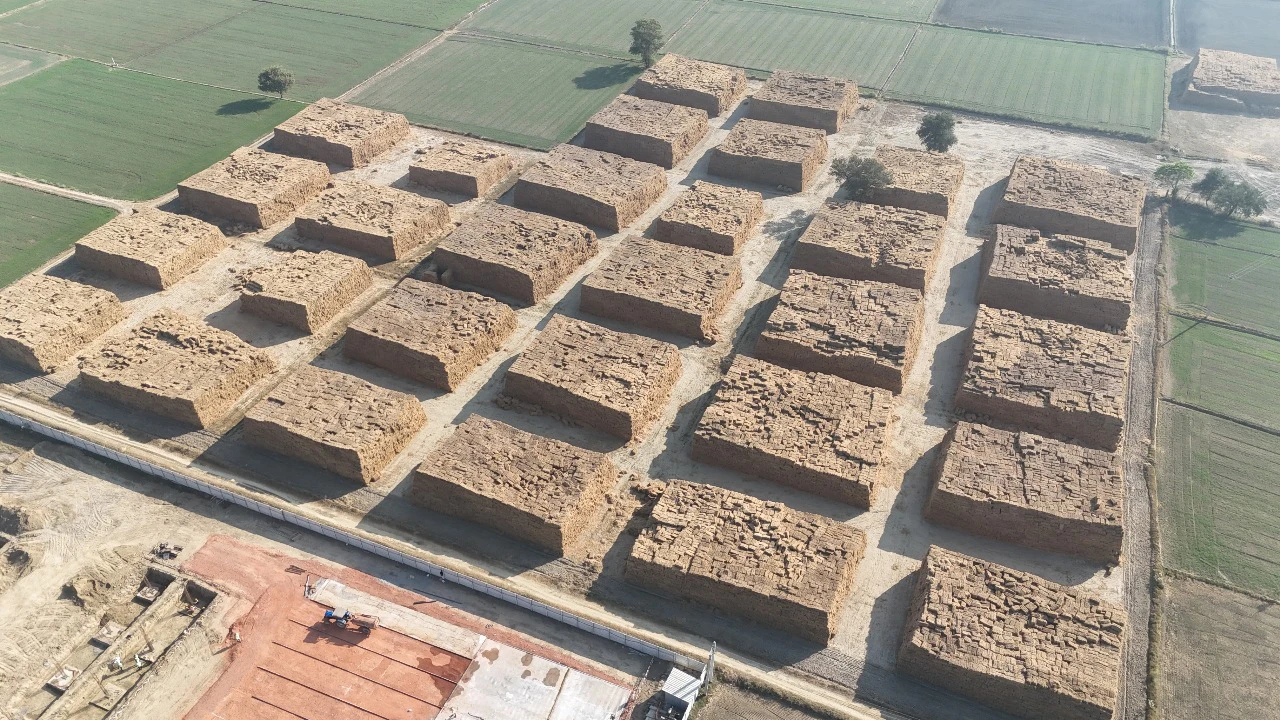
In India, the practice of open burning of crop residue remains widespread, and the resulting air pollution is a major environmental concern. Rice farmers also expend fuel when burning rice straw produced in the harvesting process, which raises operating costs and creates additional financial strain. Sojitz identified compressed biomethane as a comprehensive solution to these energy-related challenges. In 2025, Sojitz invested in the holding structure of IGRPL, a special purpose company established jointly by IOCL and GPSR. IOCL is India’s flagship state-owned oil company involved in the entire energy value chain, from upstream exploration and production of oil and gas to downstream operations such as refining, pipeline transportation, marketing, and alternative energy through advanced technologies and cutting-edge R&D. GPSR is a leading bio-energy company and possesses extensive expertise in the design, construction, operation, and maintenance of compressed biomethane plants. By taking part in this government-backed initiative in compressed biomethane production, Sojitz aims to both reduce air pollution by using the rice straw farmers typically burn as a raw material for biogas while also improving farmer incomes by eliminating the fuel usage previously required for open burning.
The Indian government has mandated the use of compressed biomethane by city gas suppliers and announced a plan to incrementally increase the percentage of compressed biomethane that must be blended for automotive and residential usage. Specifically, compressed biomethane had to account for 1% of total consumption in these sectors in FY2025, and the requirement will increase to 4% for FY2027, then 5% for FY2028 onward. Some state governments have introduced measures to promote the blending policy, such as granting a subsidy to the first company to apply to launch a compressed biomethane-related business in each region. The system is designed to give an advantage to early adopters in order to rapidly accelerate progress. In addition, the compressed biomethane produced at each plant is filled into cascades (bundles of high-pressure cylinders) before being transported by truck or delivered either through local pipelines or the main pipeline network operated by GAIL (India) Limited, India’s state-owned natural gas company. This system enables supply not only to urban areas, but also across the country through compressed natural gas fuel stations. Under this framework, operators can leverage the existing gas distribution network to achieve an efficient supply of compressed biomethane by building multiple small- and medium-scale plants distributed across the country, focusing on rice-producing regions.
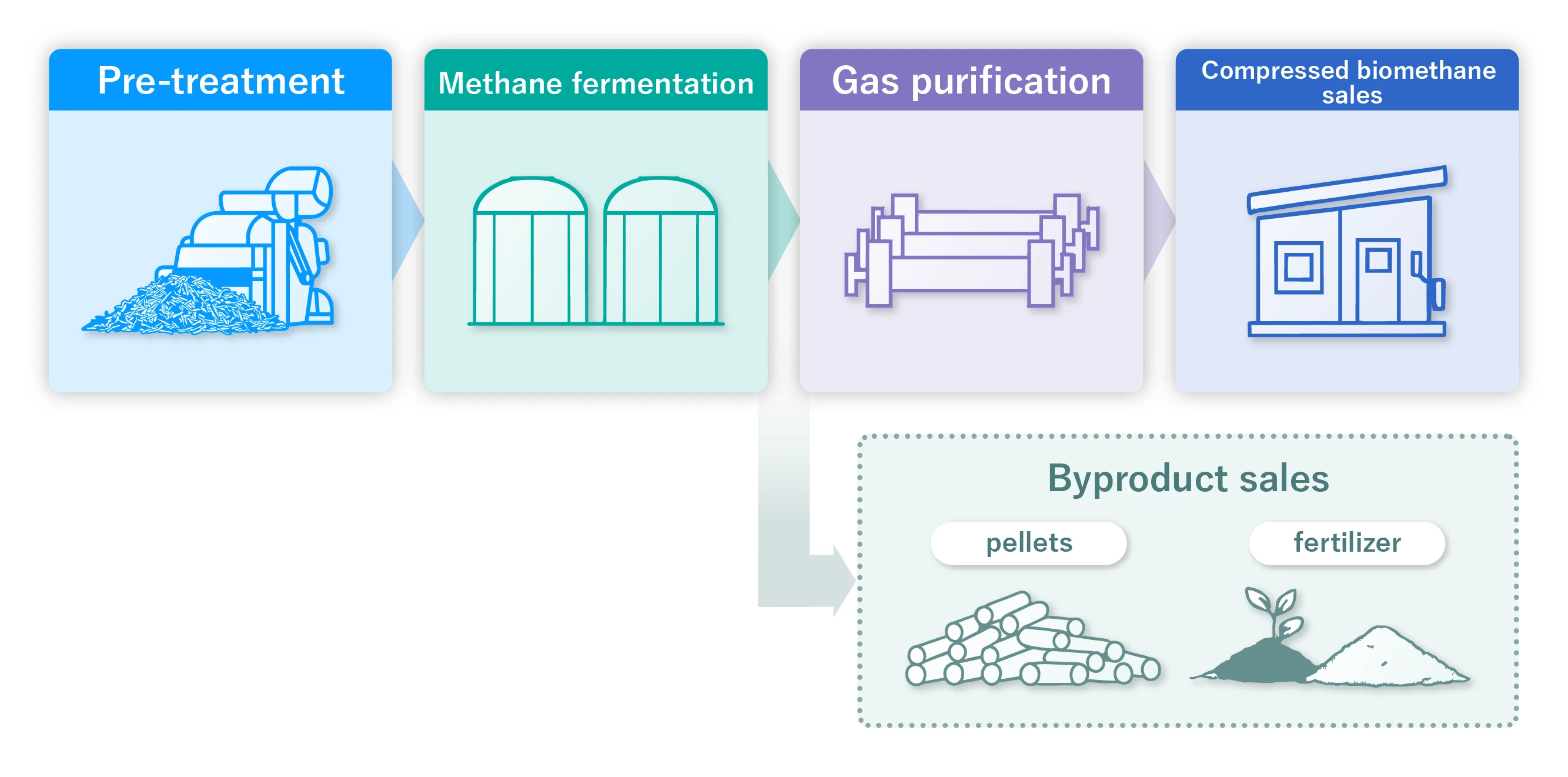
The compressed biomethane business, from production to sales
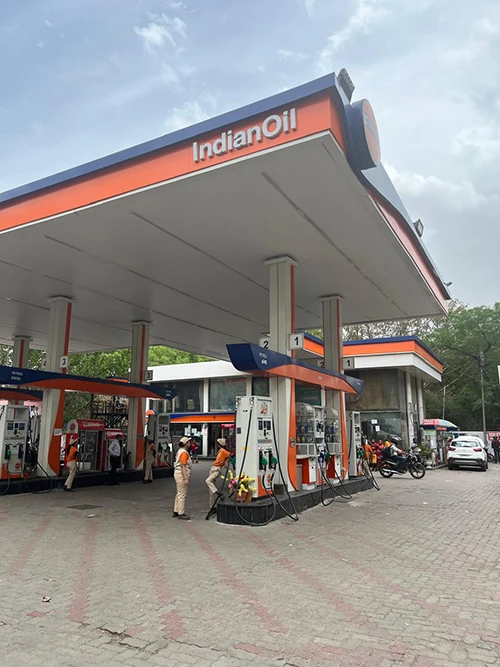
Fuel station supplying refined compressed biomethane. The product is used as fuel for compressed natural gas vehicles in India.
GPSR is among the largest players in the engineering, construction, operation, and maintenance of compressed biomethane plants in India. The company takes a value engineering approach in order to cut costs and boost efficiency, and this method has enabled GPSR to achieve efficient and low-cost construction of production plants that use rice straw to produce compressed biomethane. Meanwhile, IOCL has a strong presence in downstream gas sales operations, and the company’s existing expertise allows IOCL to facilitate smooth collaboration in biomethane offtake or marketing to city gas operators throughout the country.
As a general trading company, Sojitz has cultivated an extensive track record of business investment and operations in a diverse range of fields, and the company is drawing on this wealth of expertise to provide added value to the compressed biomethane business in India.
Japan officially launched its Green Transformation Emissions Trading Scheme (GX-ETS)*1 in April 2026, and demand for emission allowances is now rising. Against this backdrop, Japan’s new Joint Crediting Mechanism (JCM)*2 is expected to play a key role going forward. Japan and India signed a Memorandum of Cooperation to establish a bilateral carbon crediting framework in August 2025. Under the system, credit for the environmental benefits generated by a compressed biomethane business in India can be transferred to the Japanese company involved, which allows the plant in India to receive direct monetary benefits from the achieved emission reductions. Sojitz aims to leverage the JCM to create added value to its compressed biomethane business.
*1 Green Transformation Emissions Trading Scheme (GX-ETS): A Japanese government system that allocates emission allowances to businesses exceeding a specified threshold of direct CO₂ emission. The program aims to promote decarbonization and industrial competitiveness by enabling companies to trade allowances according to their needs.
*2 Joint Crediting Mechanism (JCM): A Japanese government framework that supports partner nations in introducing advanced decarbonization technologies from Japan and allows the carbon credits generated by the resulting greenhouse gas reductions to be shared between Japan and the partner country. As of May 2026, the Japanese government is in discussions with India and 30 other countries regarding bilateral crediting agreements.
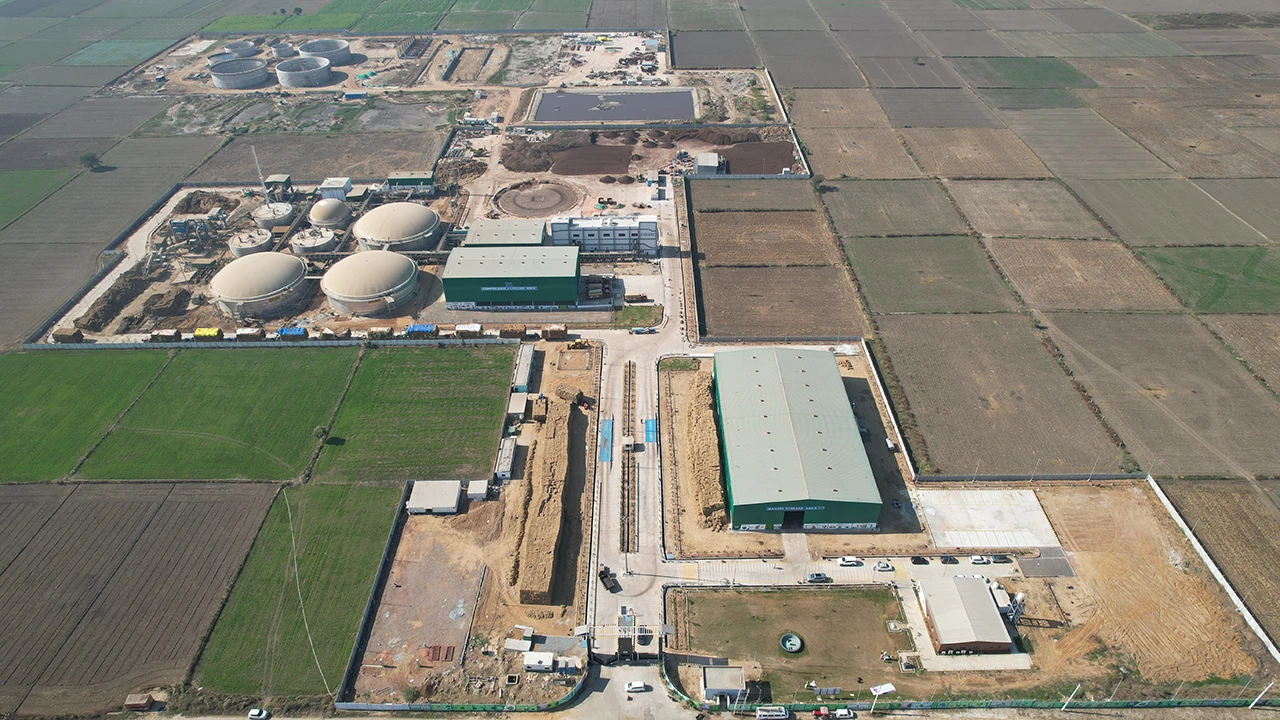
Compressed biomethane plant in operation in India. This facility handles every step of the compressed biomethane production process, including pre-treatment, anaerobic digestion, purification, and compression.
Sojitz has set a target of launching operations at 30 compressed biomethane plants in India by FY2027, with plans to produce and sell 160,000 tons of compressed biomethane annually. After gaining practical experience and know-how through this biomethane initiative in India, Sojitz aims to combine the insights gained with its existing global network in order to expand the compressed biomethane business in other high rice-producing areas primarily in the Asia region.
In 2026, Sojitz made an equity investment in U.S.-based biomethane production company Fidem Energy LLC. Located in the Southeastern U.S., Fidem is engaged in the production and sale of biomethane by refining biogas generated through the natural decomposition of municipal waste in landfills. Through this initiative, Sojitz aims to expand its biomethane business in the U.S. by combining Fidem’s expertise in landfill biomethane development and operations with Sojitz’s longstanding experience in business development and global networks.
Sojitz has positioned green transformation (GX) as a strategic focus area and will continue to prioritize GX initiatives going forward. Through these biomethane businesses in India and the U.S., Sojitz aims to both strengthen and expand its earnings foundation while contributing to regional energy security and global efforts to achieve decarbonization.