
Sojitz’s Rare Earths Business:
Diversifying the Supply Chain for the “Vitamins of Modern Industry”
Mar. 18, 2026
Mar. 18, 2026
Rare earth elements are essential raw materials for the creation of products featuring advanced technologies such as electric vehicles and industrial robots. Known as the “vitamins of industry,” rare earths have a wide range of manufacturing applications, and a long-term stable supply of these critical minerals is a global priority. For more than half a century, Sojitz has supported Japan’s manufacturing industry through the import and sale of rare earth products. Sojitz recognized the need to diversify the rare earths supply chain at an early stage and proactively formed a strategic alliance with Lynas Rare Earths Limited, an Australia-based rare earths mine developer. Sojitz now imports Lynas’ rare earth products made using ore from Australia, and the company is actively developing a supply framework that avoids future reliance on any one country. This article provides an in-depth look at Sojitz’s rare earths business.
- With over 60 years in the rare earths business, Sojitz has long pursued diversification of the supply chain
- Sojitz formed a strategic alliance with rare earths mine developer Lynas to ensure a long-term stable supply
- Sojitz first began its relationship with Lynas through loans and equity investment, and subsequently went on to drive business growth through the import and sale of Lynas’ products and further capital contributions.
Rare earth elements are a group of metals that play a critical role in the production of a wide range of advanced technologies, including permanent magnets used in EVs and wind turbines, batteries, automotive catalysts, fuel cracking catalysts, and polishing powders for industrial products. There are 17 rare earth elements in total, including scandium, yttrium, and the 15 lanthanides. This group of 17 is divided broadly into light rare earths and heavy rare earths. Light rare earth elements (LREEs) are comparatively more abundant and used in the production of magnets and catalysts, while the highly scarce heavy rare earth elements (HREEs) have applications including enhancing the heat resistance of magnets. Rare earths are known as the “vitamins of industry” for their unique ability to enhance properties such as magnetic force or durability when alloyed with other metals.
Rare earth elements are frequently found mixed alongside naturally occurring radioactive materials within mineral ore, and complex processes using specialized equipment are required to separate and refine the mined ore into each element. While rare earths are widely distributed across the globe, only a few select countries had the capacity to complete these processes, and the world relied on these nations for rare earths production and supply for many years.
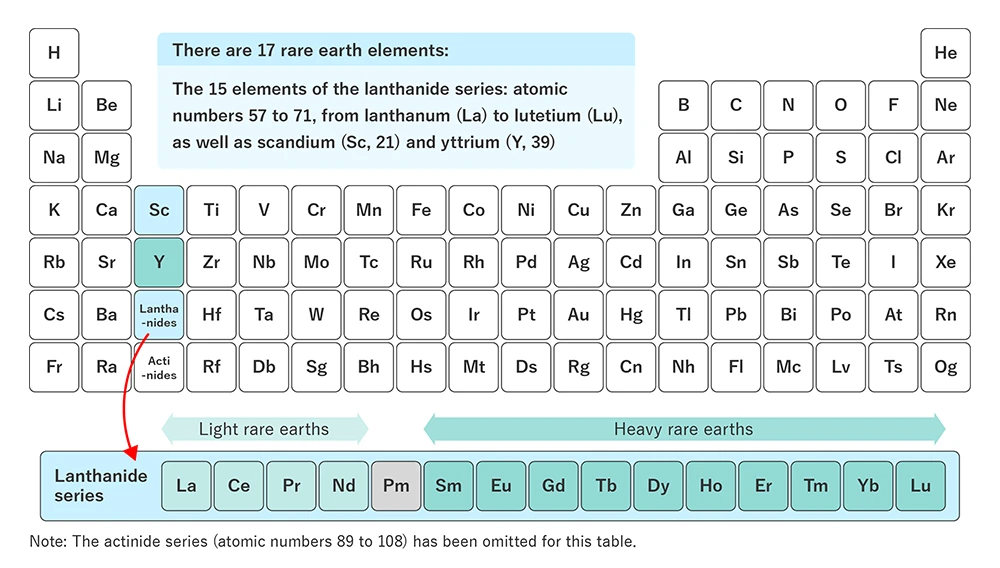
Rare earths in the periodic table
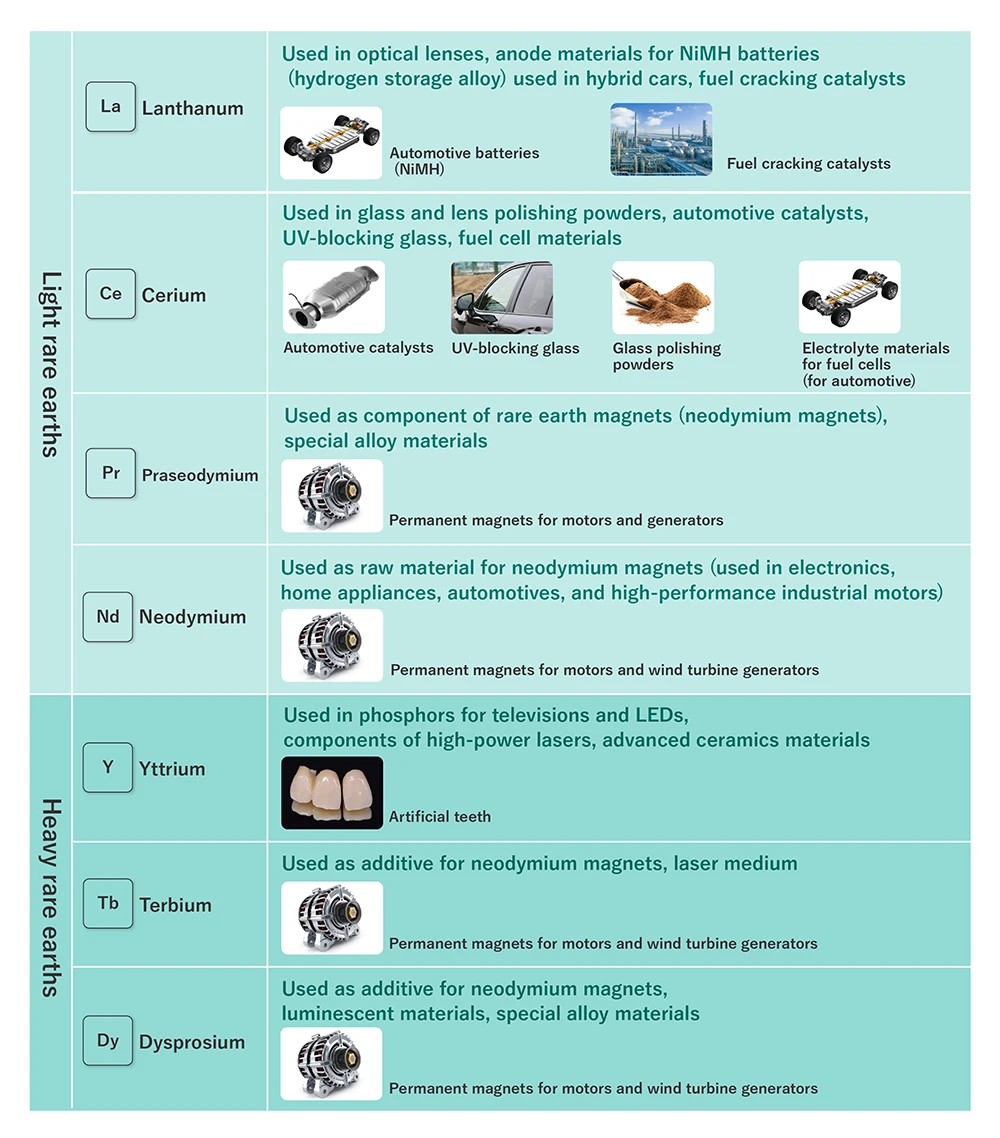
Major rare earth elements and their primary applications
Rare earths are an important raw material for Japan, where electronics production and other manufacturing fields have long served as key drivers of economic growth. Japan has also been a global leader in the development of technologies that leverage the properties of rare earths since the initial rise of modern production alongside the proliferation of the color television in the 1980s. However, there were a limited number of global suppliers capable of the highly specialized processes for separation and refinement of the ore.
With no domestic infrastructure for rare earth refining or production, Japan relied on imports to meet nearly all of its demand. Given this dependence on imports and Sojitz’s close to 60 years of experience importing rare earths from China, the company was able to recognize the need for diversification at an early stage in order to secure a long-term stable supply of these critical minerals. Sojitz began laying the groundwork necessary to execute its strategy for diversifying the rare earths supply chain.
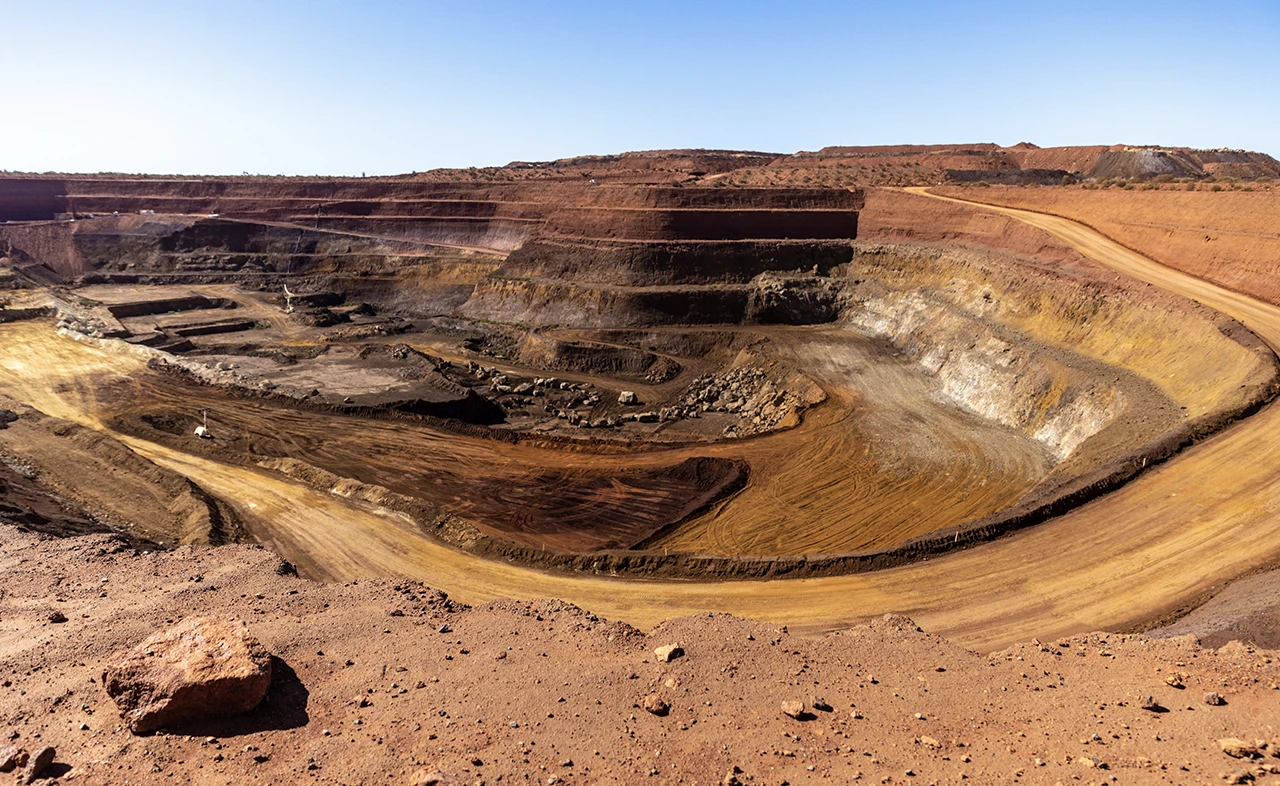
In 2010, Sojitz took its first steps towards diversifying the supply chain and ensuring a stable supply of rare earths by initiating negotiations with Lynas Rare Earths Limited, an Australia-based mining company that develops rare earth resources at its Mt. Weld mine in Western Australia. The two companies concluded a basic agreement for a strategic alliance in November 2010.
Sojitz set its sights on Lynas as a new rare earths supplier based on the company’s involvement with the development of the Mt. Weld mine, and Lynas’ growth potential was a key deciding factor for Sojitz’s selection of the company as a potential business partner. In March of 2011, Sojitz provided Lynas with USD 250 million*1 in loan and equity investment alongside the Japan Oil, Gas and Metals National Corporation (currently the Japan Organization for Metals and Energy Security (JOGMEC)) with support from Japan’s Ministry of Economy, Trade and Industry (METI). Through the investment, Sojitz secured both exclusive distribution rights for Lynas’ rare earth products in Japan as well as priority supply rights for a maximum of 9,000 tons per year,*2 establishing a framework for the stable supply of Australian rare earths imports to Japan.
*1: Approximately JPY 20 billion at the exchange rate in 2011
*2: Amount equivalent to roughly 30% of Japan’s total rare earths demand in 2011
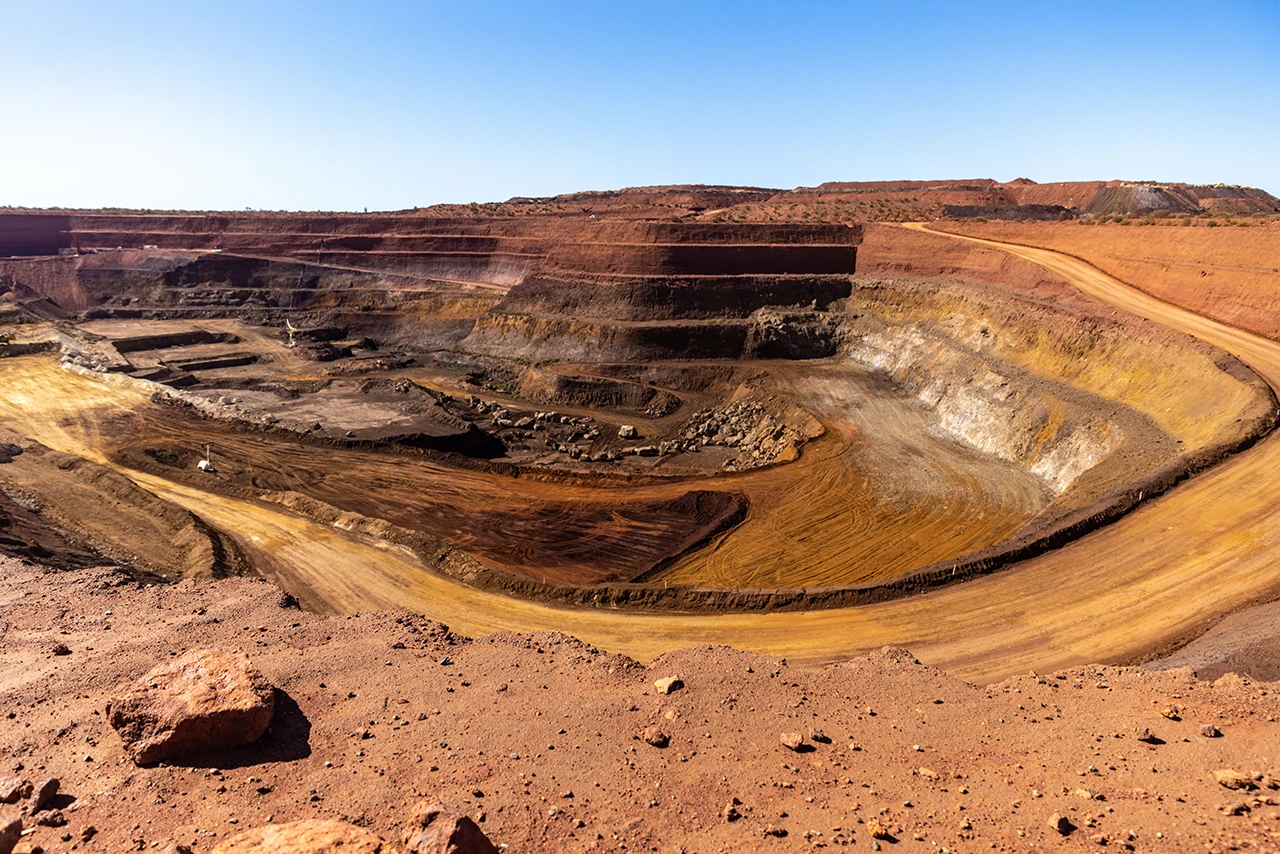
Lynas’ Mt. Weld mine in Western Australia
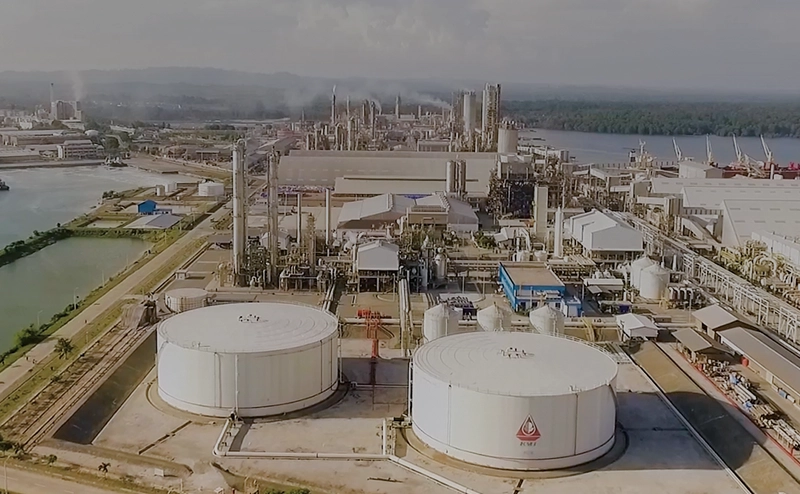
The rare earth ore mined at Mt. Weld in Australia undergoes mineral processing and concentration on-site. The minerals are then transported to Lynas’ processing plant in Malaysia where rare earth products are then produced by separating and refining the rare earth materials. Lynas supplies these products to end users primarily based in Japan. Malaysia was identified as a strategic location for Lynas’ advanced materials plant due to factors including the maturity of the country’s chemicals sector and its proximity to both Australia and Japan.
When Lynas first began producing rare earth materials in 2013, the company initially faced challenges with ensuring a consistent output that met the quality needs and specifications of end users. Sojitz served as Lynas’ marketing partner and drew on its extensive track record in the rare earths business to communicate with customers and convey their requests and requirements. Sojitz and Lynas worked together through trial and error to resolve each issue and enhance product quality. Sojitz’s in-depth understanding of both end-user specifications and market trends allows the company to facilitate a mutually beneficial outcome that addresses the needs of Lynas and its customers, and Sojitz has successfully established a supply framework that now meets roughly 70% of Japan’s domestic demand for light rare earths (Neodymium-Praseodymium).
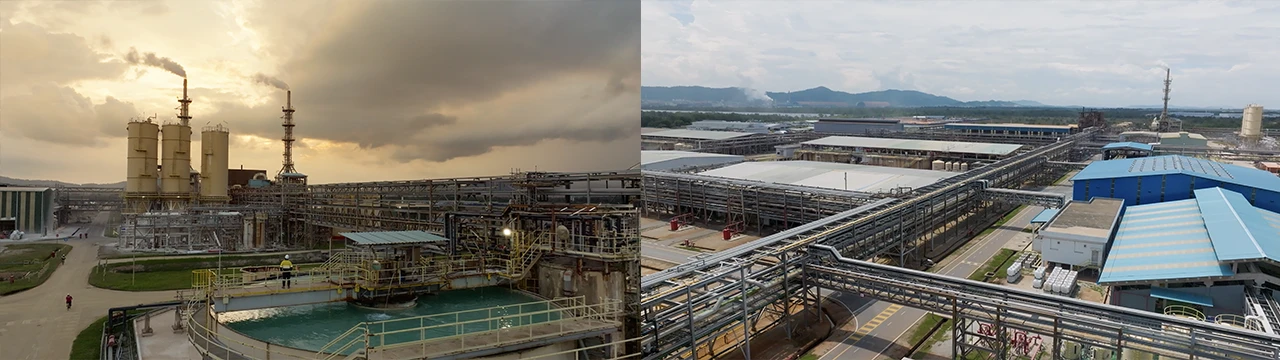
The rare earth minerals extracted at Lynas’ Mt. Weld mine in Western Australia undergo concentration processing on-site before being shipped to the Malaysia advanced materials plant where they are converted into raw material products
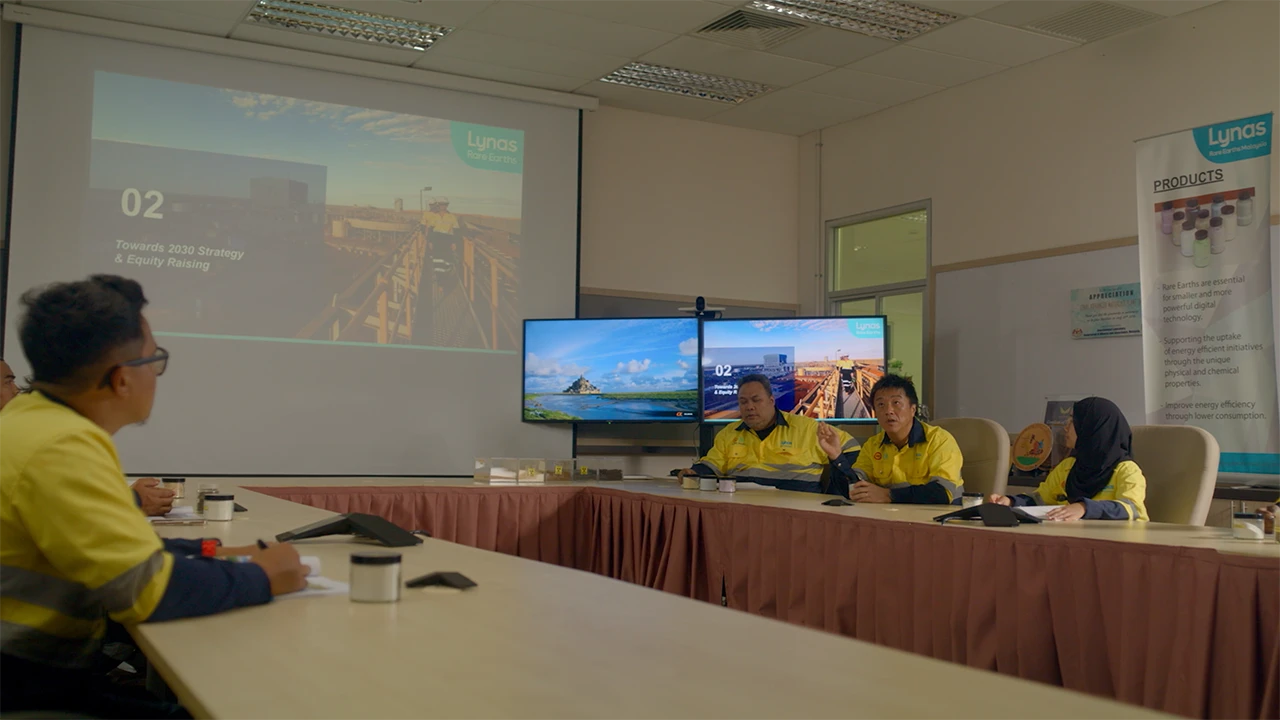
By combining Lynas’ production technology with Sojitz’s insights into end user needs, the two companies are able to ensure a long-term stable supply of high-quality rare earth products
Sojitz’s over half century in the rare earths business has not always been smooth sailing. From geopolitical issues arising from shifts in international affairs to changes in regional laws and regulations, the company has navigated an ever-evolving business environment. Despite these obstacles, Sojitz has continued to forecast market needs and drive business forward, motivated by a strong sense of purpose and responsibility to support Japan’s manufacturing industry. This strong commitment has served as the foundation for Sojitz’s rare earths business as it stands today.
Lynas first began its rare earths business by handling LREEs, but the company also spent many years developing its capacities in preparation for commercial production of HREEs, which are found in lower concentrations in the ore and therefore require more advanced techniques for processing. Demand is currently growing for HREEs for use in rare earth magnets and other cutting-edge products. Once Lynas had successfully laid the foundations for HREE production, Sojitz and Lynas began imports of two HREEs, dysprosium and terbium, into Japan in October 2025. This initiative marked the first import*3 of rare earth products produced from Australian ore that is separated and refined in Malaysia, and Sojitz expects to eventually meet roughly 30% of Japan’s total domestic demand for dysprosium and terbium through this supply.
*3: Sojitz study
Sojitz is able to accurately understand end users’ quality needs as well as ongoing market changes and share these insights with Lynas. Through this framework, Sojitz has established a supply chain that allows the company to deliver goods and services where there is a need. Sojitz’s supply chain ensures stable access to rare earths and supports manufacturing not only in Japan, but around the world. Looking ahead, Sojitz will continue to strengthen its partnerships with rare earth stakeholders globally to further diversify the supply chain and drive the growth of its rare earths business.
Sojitz Begins Mineral Exploration and Development of Rare Earths Mines(Mar. 13, 2026)
Sojitz Begins Import of Heavy Rare Earths from Australia(Oct. 30, 2025)
Securing Supply of Heavy Rare Earths to Japan with Additional Investment to Lynas(Mar. 7, 2023)
JARE Supports Lynas’ Development with Additional Equity Investment(Sep. 20, 2022)